Developing novel approaches for anti-cancer therapies.
The primary goal of research projects in Cheng laboratory is to improve our understanding of the molecular mechanisms and signaling pathways of human cancer initiation, tumorigenesis, invasion, metastases and therapy resistance, and to develop novel approaches for anti-cancer therapies. Our approaches include computational methods, molecular and cellular biology, tumor xenograft model in animal, human iPSC-derived glioma model, and 3D tumor organoid model.
The Latest From the Lab
News Center:
Targeting Novel Long Non-Coding RNA May Improve Glioblastoma Treatment
Read More| View Interview
Selected Publications:
- Yu X, et al. An EGFR co-amplified lncRNA HELDR promotes glioblastoma malignancy through KAT7-driven gene programs. Nat Cell Biol 2026 Mar 27.
- Wu R, et al. Tumor-associated astrocytes augment cholesterol synthesis to support glioblastoma growth through alternatively spliced Quaking (QKI) isoforms. Neuro Oncol 2026 Feb 17;. pii:noag030
- Song X, et al. A single-cell atlas of RNA alternative splicing in the glioma-immune ecosystem. Genome Biol 2025 Dec 12;26(1):426. pii:426
- Tiek D, et al. Cysteine addiction in drug resistant glioblastoma and therapeutic targeting with designer selenium compounds. Neuro Oncol 2025 Nov 10;. pii:noaf265
- Yu X, et al. Targeting PDGFRA-SHP2 signaling enhances radiotherapy in IDH1-mutant glioma. Neuro Oncol 2025 Sep 17;27(8):2023-2034.
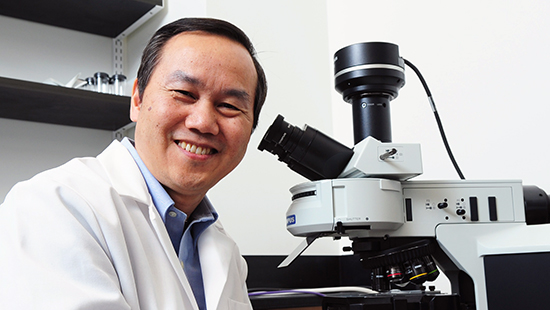
Lab Leadership
Shi-Yuan Cheng, PhD
Professor of Neurology (Neuro-oncology)